Euthanasia doctor: ‘I don’t call it killing’ – Added December 2020
This short documentary from BBC Stories follows a euthanasia doctor with his patients, offering insight into the pro-death mentality that has infiltrated the medical facilities of the western world. Doctor Yves de Locht practices euthanasia in Belgium, one of the most liberal countries on this deadly procedure. “I don’t call that killing a patient,” says Locht. “I shorten his agony, his suffering, I provide final care, but I don’t feel like I’m killing the patient.” Doctor Locht has euthanized more than 100 people. Eventually he started keeping a diary of his patient’s stories. In a moment of reflection, he admitted that he has to choose which patients to euthanize, and that he has had to say “no” to close friends or family members because it was too hard on him emotionally.
This film highlights several patients who asked for Doctor Locht’s “services.” One, referred to as Alain, was a man suffering from Amyotrophic Lateral Sclerosis (ALS). Another patient, Louise, was in perfect health. In crude language she explained her desire to go out on her own terms.
The film makers put the most focus on a third patient, Michel, who suffered from jaw cancer. According to his wife, he began his cancer treatment by saying, “I will struggle up to the end. I will do my best to be cured.” However, when the treatments failed to work, he gave up and contemplated suicide. Michel, talking directly to the camera, thanked Doctor Locht for allowing him a way to “die with dignity.”
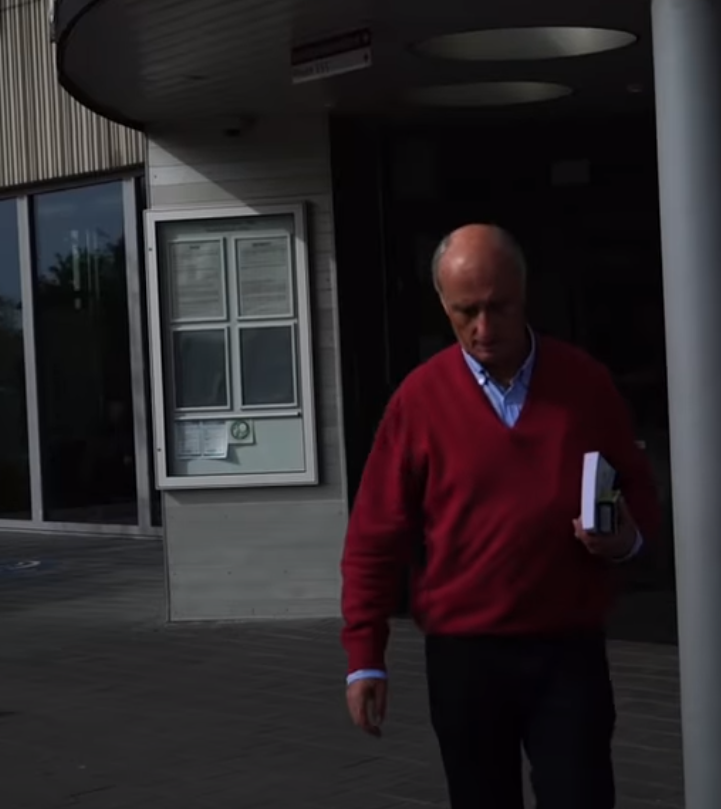
As the film comes to a close, Doctor Locht is pictured leaving a hospital after euthanizing Michel. The doctor explained that it went “smoothly” while revealing that “it was a long night” and it “hit him” emotionally.
Euthanasia doctor: ‘I don’t call it killing’ is disturbing to watch, especially for a person with a life-affirming mindset. Many of the choices made in the film pervert the meaning of dignity by promoting the attitude that when a life is deemed “difficult,” it should be ended. But our human dignity comes from the terms set by our Creator, not the terms we choose for ourselves. A life well lived is one that is properly accepted as a gift and is lived bravely through the inevitable adversities we each will face. This is a message which medical professionals would be wise to heed. When Doctor Locht is called “home,” one hopes that his conscience will not have been completely euthanized and that he will have asked for God’s mercy before facing judgment.
Reviewed by Chris Rogers
Image: BBC Stories
Would you like to help HALO with its life-affirming work?
With the holidays coming up soon, please prayerfully consider letting friends and family know that in lieu of gifts they could choose to make a donation to HALO!
Send your donations (checks only) to: HALO, 7301 Bass Lake Rd, Minneapolis, MN 55428
Credit card donations can be made securely Online:
Healthcare Advocacy and Leadership Organization is a 501 (c)(3) organization. Donations are tax-deductible to the extent allowed by law.
HALO MISSION STATEMENT
The mission of the Healthcare Advocacy and Leadership Organization is to promote, protect, and advocate for the rights of the medically vulnerable through direct patient and family interactions; through community education and awareness programs; and through promotion and development of concrete *”life-affirming healthcare”* alternatives for those facing the grave consequences of healthcare rationing and unethical practices, especially those at risk of euthanasia and assisted suicide.
*”Life-affirming healthcare” is defined as medical care in which the paramount principle is the sanctity of life, which means that the life and safety of each person come first and each person receives medical care across their lifespan based on their need for care and never with an intention to hasten death, regardless of their abilities or perceived “quality of life.”
In the 2020 film “Words on Bathroom Walls”, the teenage character Adam battles with being viewed as a schizophrenic and nothing else. Adam is very gifted in the kitchen and has dreams of culinary school, but he first needs a high school diploma. His condition makes that a challenging goal to achieve.
Left without many other options, Adam’s mother and her boyfriend, Paul, move Adam to a Catholic high school after a psychotic incident in which Adam injures a fellow student in chemistry class. Adam works to conceal his condition from many around him, including his love interest, Maya, and fellow students. He faces additional struggles with those who know he has schizophrenia and is suspicious of many people, including the headmaster of the school, the priest, Paul, and even his own mother. Fueled by the perceived condemnation of those around him, Adam hallucinates and imagines discouraging words about him on the bathroom walls. Ultimately, with the help of the priest truly listening to him and Paul’s fatherly support, Adam learns his value and persuades others of his value as well, proving that a person is a person and NOT his or her diagnosis.
Reviewed by Chris Rogers
mage: Roadside Attractions.
ATTENTION READERS
If you are in a position to help HALO financially—and ONLY if you are positioned to do so—your generous donation at this time is crucially important. Anything you can do is greatly appreciated.
Donations are tax-deductible to the extent the law allows.
Please send checks only to: HALO, 7301 Bass Lake Rd, Minneapolis, MN 55428.
The mission of the Healthcare Advocacy and Leadership Organization is to promote, protect, and advocate for the rights of the medically vulnerable through direct patient and family interactions; through community education and awareness programs; and through promotion and development of concrete *”life-affirming healthcare”* alternatives for those facing the grave consequences of healthcare rationing and unethical practices, especially those at risk of euthanasia and assisted suicide.
*”Life-affirming healthcare” is defined as medical care in which the paramount principle is the sanctity of life, which means that the life and safety of each person come first and each person receives medical care across their lifespan based on their need for care and never with an intention to hasten death, regardless of their abilities or perceived “quality of life.”